Cellular Therapy and CAR T-Cells: Advancements, limitations and the path forward in Australia

Icon Writers / 06 May, 2026

CAR T-cell therapy is redefining what’s possible for some patients with blood cancersbut access, safety and system readiness remain critical challenges in Australia. In this article, Dr Karthik Nath, Icon Cancer Centre (Australia’s) Deputy Director of Cellular Therapy and clinical haematologist at Icon Cancer Centre South Brisbane, explains how CAR T-cell therapy works, where it’s delivering impact today, and why clinical trials are central to expanding access. 

Cellular Therapy and CAR T-Cells: Advancements, limitations and the path forward in Australia

By Dr Karthik Nath, Icon Cancer Centre (Australia) Deputy Director of Cellular Therapy 

What was once considered experimental is now delivering transformative outcomes for patients, made possible through a perfect execution of advances in clinical expertise, research and novel therapeutic design – redefining what is possible in the treatment of rare blood cancers.  

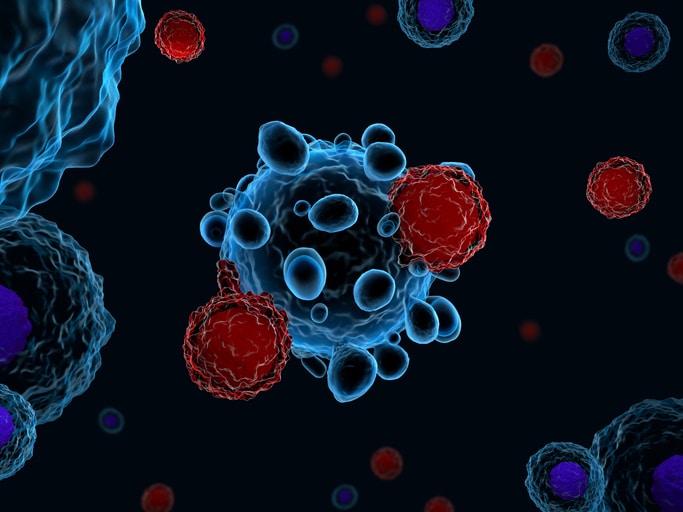
Chimeric Antigen Receptor (CAR) T-cell therapy represents one of the most important advances in blood cancers over the past decade. This revolutionary highly personalised form of cellular immunotherapy uses a patient’s own immune cells and genetically modifies them to target and attack the cancer with remarkable precision. 

Clinical momentum

For patients with specific types of relapsed or refractory lymphoma, acute lymphoblastic leukaemia (ALL) and multiple myeloma, CAR T-cells have demonstrated response rates that were previously unattainable with conventional treatments.

As clinical experience and research investment grows, the focus has shifted from proof of concept to optimisation, specifically refining patient selection, improving toxicity management, and integrating CAR T-cell therapy into existing treatment pathways.

How CAR T-cell therapy works  

For eligible patients, treatment begins with T-cell collection, a process by which immune cells (T-cells) are collected from the patient’s blood. These immune cells are then sent to a lab to have a new gene added into them which helps to recognise and kill cancer cells. Once T-cells have this new gene, they’re called CAR T-cells. It can take a few weeks to make CAR T-cells. Sometimes patients may require other treatments to keep their cancer under control during CAR T-cell manufacturing. 
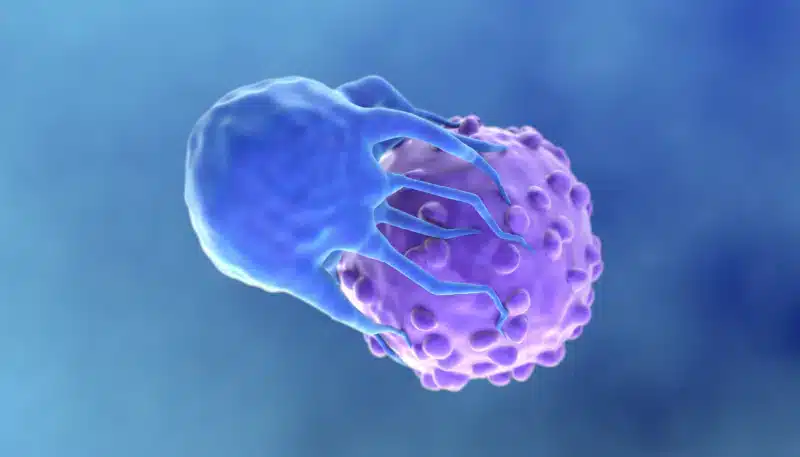
After the CAR T-cells are made, patients generally get a low dose of chemotherapy. This helps to make the body ready so that the CAR T-cells can work most effectively. The low dose chemotherapy is not meant to kill cancer cells. 

Once infused back into the body through a quick, one-time IV infusion, the CAR T-cells function as a living drug, capable of detecting a target protein on the cancer cell and can exponentially expand inside the body and potentially kill these cells at scale. 

Managing risk and safety 

Although this form of cellular therapy is highly effective, it is not without short term risk. Patients are monitored closely for side effects. Cytokine release syndrome (CRS)neurological changes and infections are common side effects after a CAR T-cell infusion.

CRS is a group of symptoms that occur when T-cells attack the cancer and mount an exaggerated immune response. These effects result from widespread immune activation and cytokine release, and while they are typically reversible, they can be severe if not promptly recognised and managed.

As such, successful delivery requires rigorous patient assessment, experienced multidisciplinary teams, and close monitoring within appropriately equipped centres. When CRS is promptly identified and managed, these side effects will go away. 

Accelerating access through clinical trials 

The complexity and high cost of CAR T-cell manufacturing and treatment have contributed to Australia’s comparatively slower uptake of CAR Tcell therapy compared to counterparts in other parts of the world. It is expensive because the cells are engineered individually for each patient. 

In Australia, CAR T-cell therapy is currently available predominantly in the public system for select patients with specific types of lymphoma, ALL, and indications for multiple myeloma are expected to follow. Access remains limited by geography, narrow eligibility criteria and late disease positioning.

At present, clinical trials represent the most effective mechanism to further expand access to CAR T-cell therapy in Australia.

Trials can also enable studying earlier use of CAR T-cell therapy and provide an avenue to potentially access more effective and less toxic next-generation products.

Importantly, they allow innovation to progress within tightly governed protocols that prioritise patient safety while accelerating system-wide learning.

At Icon Cancer Centre South Brisbane, we have recently activated a clinical trial using an innovative allogeneic CAR T-cell for the treatment of specific types of lymphoma. Here, immune T-cells are derived from healthy donors rather than the patient which means that treatment can be given more quickly and, in many cases, safely delivered in an outpatient setting. The trial also incorporates an ultra-sensitive blood test, which is much more sensitive than routine imaging after initial therapy. The test helps doctors determine if there is any residual lymphoma, and thereby predicts which patients are at risk of future relapse. Patients who test positive with this blood test can be treated with allogeneic CAR T-cells and are intervened at a much earlier stage – immediately after frontline therapy and before their disease relapses.  

Early interim results from participating centres overseas are encouraging, suggesting early indications of positive patient outcomes. As an international, randomised study involving multiple centres, a successful outcome could lead to broader approval of this therapy and significantly change how CAR T-cell treatment is delivered in the future.

Enabling equitable access

Australia has the clinical capability to safely deliver CAR T-cell therapy beyond the public sector. Private centres with established autologous (using patients’ own stem cells) and allogeneic (donor stem cells) transplant programs possess the necessary expertise, infrastructure and multidisciplinary support.

Icon Cancer Centre operates Queensland’s largest autologous stem cell transplant service, and is Australia’s only private allogeneic transplant program, supported by advanced laboratory capabilities and specialist clinical teams. From a capability perspective, the foundations to deliver CAR T-cell therapy at scale already exist.

The primary barrier is not clinical readiness, but funding and reimbursement models that currently restrict access across our multisectoral healthcare system. As the demand continues to increase, this approach may become increasingly unsustainable.

A coordinated national approach that incorporates both public and private providers will be important to ensure equitable access, reduce system pressure and improve outcomes for patients regardless of location.

A hopeful future for cellular therapy

Internationally, markets such as the United States already offer multiple CAR T-cell products across disease indications. Australia is beginning to build similar momentum. A CAR T-cell product for multiple myeloma is expected to become available soon. While progress in Australia has been meaningful, access remains constrained and clinical delivery models must continue to evolve. 

CAR T-cell therapy has moved beyond experimental innovation to become a defining pillar of modern blood cancer treatment. The next phase will not be shaped by science alone, but by our capacity to translate innovation into sustainable, system ready care. 

While reimbursement pathways will take time to mature, clinical trials offer an immediate and practical pathway forward – allowing patients to receive novel CAR T-cell therapies as investigational products while evidence, experience and delivery models continue to mature. Achieving greater access will require alignment across clinicians, policymakers, regulators, pharmaceutical companies and research partners. 

CAR T-cell therapy has reached a pivotal and hopeful moment in Australia. The challenge is no longer proving the value of CAR T-cell therapy but ensuring our health system evolves quickly enough to deliver it equitably, safely and at scale. For many Australians, that progress is already beginning to translate into meaningful, life changing outcomes – offering a powerful and hopeful path for patients today. 

View all News

Search

Contact us